


Ningbo Wonsmart Motor Fan Company is a professional manufacturer with a focus on small sized brushless dc motors and brushless dc blowers. Our blower's max airflow reaches 400 cubic meter per hour and a max pressure of 60 kpa.
Wide Product Range
Wonsmart production and inspection equipment include auto winding machines, balancing machines, and CNC machines. We also have airflow and pressure testing equipment and motor performance testing equipment. All products are 100% inspected before delivery to guarantee all the products arrive at the customers with satisfied quality.
Quality Assurance
Wonsmart is certificated by ISO9001 With ETL, CE, ROHS, REACH and ISO13485 certification,we have paid attention to product quality and customer service. Our professional and energetic team hold the same goal of being one of the best brushless motor and blower supplier.
Products Sell Well
Wonsmart's products are exported to North America, EU, Japan and Korea. Customers from these countries are very satisfied with Wonsmart's stable quality, fast delivery and reasonable price.
OEM & ODM Available
We also accept ODM and OEM projects and customized specification. Please feel free to contact us.
What is Industrial Air Blower
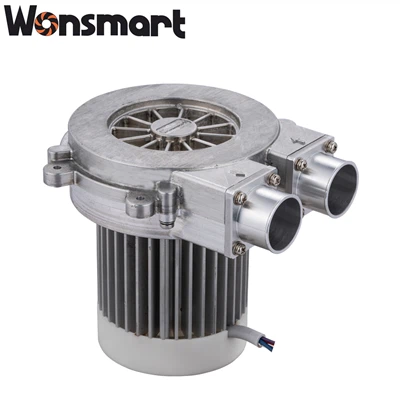
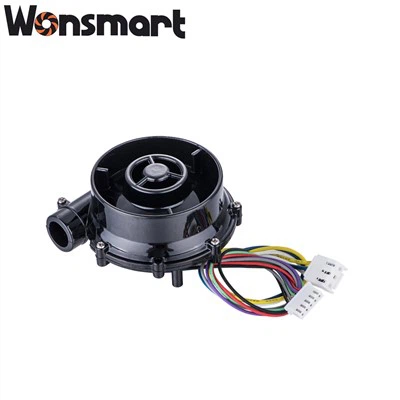
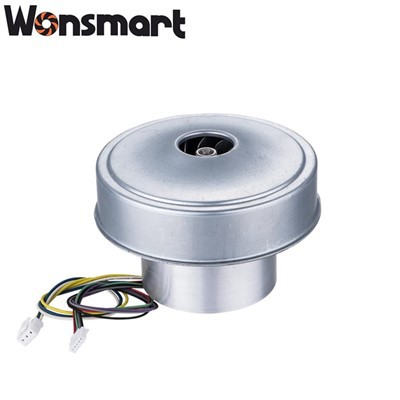
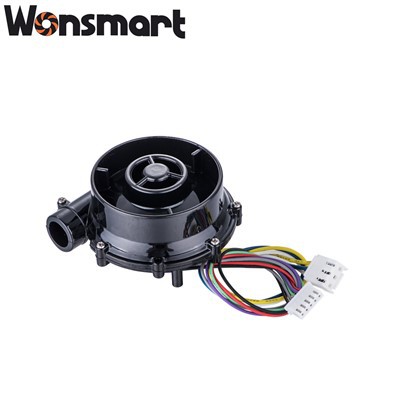
An Industrial Air blower is a blower, whose main function is to supply a huge flow of air or gas to the various processes in the industries. They are electric fans with wheels and blades to drive a current of air or gas from one point to another with certain specifications. If you want to know the specifications and prices of Industrial Air Blower, please contact us!


$ 53.90
$ 181.50




$ 64.90
Product Categories
Latest Products


Improve Ventilation
One of the main benefits of using an industrial air blower is improved ventilation. In industries such as mining, construction, and manufacturing, proper ventilation is essential to maintain a safe and healthy work environment. Industrial air blowers can help to circulate fresh air into the workspace, which can help to remove harmful gases and particles and prevent the buildup of heat and humidity.
Air Blowers for Drying and Cooling
Industrial air blowers can also be used for drying and cooling applications. In industries such as food processing, pharmaceuticals, and textiles, it is important to maintain a specific temperature and humidity level. Industrial air blowers can help to dry or cool products by circulating air through the material. This can help to improve product quality and reduce the risk of spoilage.
Conveying Materials
Industrial air blowers can also be used for conveying materials. In industries such as agriculture, mining, and construction, materials such as grain, sand, and gravel need to be moved from one location to another. Industrial air blowers can be used to create a flow of air or gas that can move these materials through a pipeline or chute.
Energy Efficiency
Industrial air blowers are also known for their energy efficiency. They are designed to provide a high volume of air or gas with minimal energy consumption. This means that they can help to reduce energy costs and improve the overall efficiency of a system.
Low Maintenance
Industrial air blowers are designed to be low maintenance, which can help to reduce maintenance costs. They are typically built to withstand harsh environments and require minimal upkeep. In addition, many industrial air blowers are designed with easy access to internal parts, making maintenance and repairs simple and straightforward.
Quiet Operation
Industrial air blowers are also known for their quiet operation. Many models are designed to minimize noise levels, which can help to create a more comfortable work environment for employees. This can also help to reduce noise pollution in the surrounding area.
Flexible Designs
Industrial air blowers are available in a wide range of designs, making them suitable for a variety of applications. They can be customized to meet specific requirements, such as the volume of air or gas needed, the pressure required, and the environment in which they will be used.
Types of Industrial Air Blower
Positive Displacement Industrial Blowers
Positive displacement is the opposite of negative displacement. Industrial blowers, also known as lobe blowers, use a safety valve to discharge air at a precise time, pressure, velocity, and direction. The name lobe blower comes from the mechanism's two counter-rotating propellers. The blower's air enters a chamber and escapes through an outlet. The blower can maintain a steady airflow and pressure because of its design.
Centrifugal Industrial Blower
Due to their ability to continually move gas and air while also blocking air contaminants, centrifugal industrial blowers are the most commonly employed type of industrial blower found in ventilation systems. The airstream passes through a collection of revolving impellers, which gradually increase the air's speed and volume. As the amount of air passing through rises, the fan wheel switches in direction and accelerates. The kinetic energy of the blower increases as more air enters.
Regenerative Industrial blower
High flow low pressure compressed air blowers are also known as regenerative industrial blowers. They create a high-speed, low-pressure compressed air flow or a vacuum. The compressed air moving in the housing creates pressure. A single-stage or two-stage blower circulates air once in a single-stage blower and twice in a two-stage blower. Higher pressure is produced via a two-stage regenerative blower.
High-Speed Industrial Blower
A high-speed industrial blower produces high pressure and quick airflow by operating at a high speed. It includes an electric motor and impellers positioned around the blower shaft to maximize the volume of air sucked in. A high-speed blower is made up of a valve for releasing air and a compression unit for controlling blower speed. Each of these variables can be simply adjusted to match the operation's requirements.
Helical Screw Industrial Blower
A helical screw industrial blower features two lobes on the primary rotor and another rotor. The primary rotor is inserted into the second rotor's flute. Helical screw industrial blowers have a more complicated design, but they are exceptionally efficient at creating higher pressure. The two rotors spin in a helical pattern that is meticulously timed to prevent colliding.
Application of Industrial Air Blower




Air Handling
Industrial blowers provide high and even airflow through the ductwork of a building. Air movement is achieved by large angle blades connected to the hub of the blower.
Dust Loading
Dust loading industrial blowers collect dust to improve air quality. For some industries, dust collection is an essential part of their operations as well as being a legal requirement under Environmental Protection Agency (EPA) regulations. Air quality regulations are for the protection of workers since air particulates can lead to a variety of health conditions.
Industrial dust loading units move air and contaminants through a system that captures, collects, and removes dangerous particles. Included in the system are hoods, air filtration systems, and collectors such as baghouses, traps, and ductwork.
Fume Extraction
A wide variety of industrial processes produce fumes, smoke, and chemicals that have to be removed from the air. The fumes and other contaminants are removed by scrubbers or points of emission. This is normally achieved through the use of a system of blowers and fans.
Fume remover industrial blowers are a part of a whole system that is designed with a large capacity filtration system. The 99% efficiency of the system guarantees that all harmful odors, contaminants, and gas fumes have been removed.
Material Handling
The material handling industry uses pneumatic pressure systems to move granular and powder materials to production. Industries such as the pharmaceuticals, food processing, agriculture, chemical, and cement producers require industrial blowers to remove fine particulates from the air.
Though normal fans can remove average particles, heavier materials have to be handled by abrasion resistant, heavy duty industrial blowers that are specifically designed to withstand the wear of such materials. Blowers for these types of operations are made of exceptionally sturdy materials and are capable of enduring the severe abuse from removing the chips, particles, and granular residue.
Saturated Air
Saturated air contains moisture or gases. The term saturated air refers to when the humidity in the air is at its highest possible point in regard to the pressure and temperature. Above the established point, condensation occurs. The danger of such concentration is damage to equipment from corrosion and rust, which requires the air to be removed and cleaned.
To produce the needed results of removing saturated air, customized industrial blowers are made that are corrosion and rust resistant, which means the use of stainless steel or metals coated in a moisture resistant epoxy. The manufacture of saturated air industrial blowers requires custom designed blower blades that can perform in wet environments.
Exhausting
In small and enclosed workspaces where paint and vapors accumulate, industrial blowers serve the purpose of removing and filtering the fumes and vapors to keep the air clean. Since some of the chemicals in these applications can be combustible, exhaust industrial blowers have to be spark resistant.
A buildup of paint, lacquer, and varnish has the potential of being volatile and explosive. The spark resistant blowers for these conditions are normally made with specially fabricated aluminum impellers.
Cooling
Cooling industrial fans are referred to as fluid displacers due to the fact that they displace air in one location to move it to another location through the use of rotating blades. The purpose of cooling fans is to blow in cold air and drive out hot air, which gives them the name of industrial cooling blowers.
To accomplish the multiple operations of pulling in cool air and driving out hot air, requires a specially designed blower. Cooling fans have a larger diameter, which allows them to move large volumes of air at low pressure. Though this single feature distinguishes cooling industrial blowers, their other components, such as the motor, rotor shaft, impellers, casing, and mountings, are the same as other units.
Blow-Off
In the manufacturing process, parts that need to be painted normally go through some form of cooling and cleaning process that can involve water, specs of dust, granules, or other forms of abrasive materials. Before the parts can be painted, the particulate matter has to be removed by the forceful application of streams of air, which is provided by an industrial blower.
Industrial blowers provide a sufficient amount of force and power to remove water vapor from cooling operations or matter that accumulates on parts prior to their being painted. Pressure blowers for this purpose are made of materials to create the necessary pressure and drive to eliminate and clean parts.
High Pressure
Certain air flow systems have an increased resistance to airflow and require blowers that have greater force and power to be durable enough to provide the necessary energy. They are normally installed where there is high static pressure and can be used for equipment cooling, material conveying, drying, ventilation, or exhausting. High pressure blowers come with open drip proof motors to help maintain clean environments and enclosed ones for dusty and dirty conditions.
Due to the nature of the use of high pressure industrial blowers, they are flexible enough to be used in high temperature conditions and can be spark and corrosion resistant. For the best results, housings are welded using high gauge steel.
Component of Industrial Air Blower
The Inlet Cone
Is a component for directing air into the fan housing. It has usually another function, that i sto link the fan to pipes. Inlet cone dimensions and shapes depend on the type and function of the industrial fan.
The impeller: is the real heart of the industrial fan. It's a rotating component on which are placed the blades (that can be backward, forward or straight blades, depending on their use).
Fan Housing (or Casing )
The housing is the structure that contains the impeller; the air (or the fluid) to be handled passes through the housing and it moves toward the ventilation system. In particular, the air in the housing is compressed and, consequently, its speed increases. The performance of the fan depends on the physiognomy of the impeller and on the shape of the housing too.
The Inspection Door
The inspection door is a small door placed on the case, very useful for inspections or to perform ordinary or extraordinary maintenance.
The Motor Pedestal
The motor pedestal is the support where the fan is installed onto, distinguished between direct motor pedestal (used in direct driven fans) or bearing block pedestal(used in belt driven fans). In fans of big size the pedestal is directly welded on the case.
Consisting of shaft and bearings, the bearing block (support) is the component in charge for the transmission of the industrial fan. The bearing block is stressed by the mechanical forces such as velocity and couple, which are related to the belt drive
The Cooling Wheel
The cooling wheel is a small impeller slipped on the impeller hub for direct driven fans, or on the support shaft for belt driven fans. It is used to dispose of/dissipate the heat of the air flow, which blows through the case, to prevent damages for the most delicate parts, like the engine (bearings and electrical parts) or the support (bearings and mechanical parts).
Belts and Pulleys
They are provided within the "transmission" of the indirect driven fans. They must be chosen by qualified technicians: both the desired performance of the fan and the nominal number of engine revolutions(rpm) affect their choice.
Carter for Transmission
Its aim is to protect the drive belt by external agents, and simultaneously, to increase the security of the belt arrangement, in this way operators avoid accidental contacts with the moving belt, especially if the belt breaks.
The Unitary Base
The Unitary base is the support of the belt driven industrial fan, which acts as a support base for the installation of the industrial fan. The bedplate connects the motor and the belt driven fan in a single base (or foundation).
The Flag Motor Pedestal
The Flag motor pedestal is a base of the motor on the side of the chair. The motor is fixed on it.
The Axial Impeller
The axial Impeller is the rotating component of axial fans (which are provided with airfoil blades in aluminum die castings). The air flow meets and leaves the impeller along surfaces which are coaxial to the air flow itself.
The Fan Housing (or drum)
The Fan Housing (or drum) is the housing of the axial flow fan, which includes a welded base for the engine, to create the axial air flow.
Belt Driven Axial Housing
Belt driven axial housing is the belt driven version of the drum. The support is fixed on the base, and through the transmission it is connected to the external engine.
Our Factory

Certificate

Frequently Asked Questions
As one of the most professional industrial air blower manufacturers and suppliers in China, we're featured by quality products and good service. Please rest assured to buy high-grade industrial air blower at competitive price from our factory.
