


Ningbo Wonsmart Motor Fan Company is a professional manufacturer with a focus on small sized brushless dc motors and brushless dc blowers. Our blower's max airflow reaches 400 cubic meter per hour and a max pressure of 60 kpa.
Wide Product Range
Wonsmart production and inspection equipment include auto winding machines, balancing machines, and CNC machines. We also have airflow and pressure testing equipment and motor performance testing equipment. All products are 100% inspected before delivery to guarantee all the products arrive at the customers with satisfied quality.
Quality Assurance
Wonsmart is certificated by ISO9001 With ETL, CE, ROHS, REACH and ISO13485 certification,we have paid attention to product quality and customer service. Our professional and energetic team hold the same goal of being one of the best brushless motor and blower supplier.
Products Sell Well
Wonsmart's products are exported to North America, EU, Japan and Korea. Customers from these countries are very satisfied with Wonsmart's stable quality, fast delivery and reasonable price.
OEM & ODM Available
We also accept ODM and OEM projects and customized specification. Please feel free to contact us.
What is Medical Blower
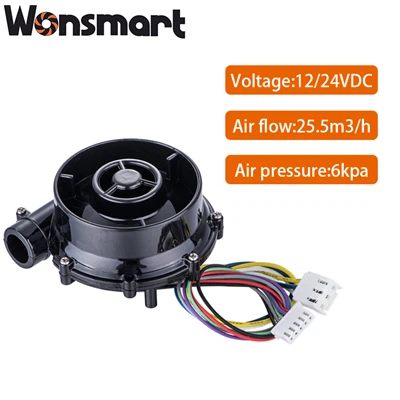
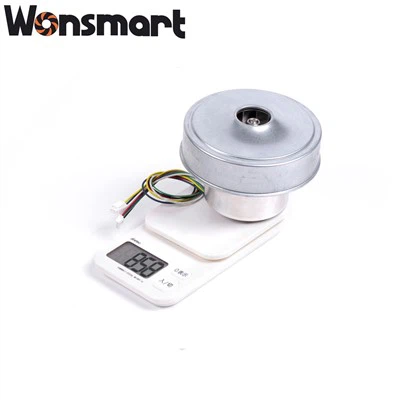
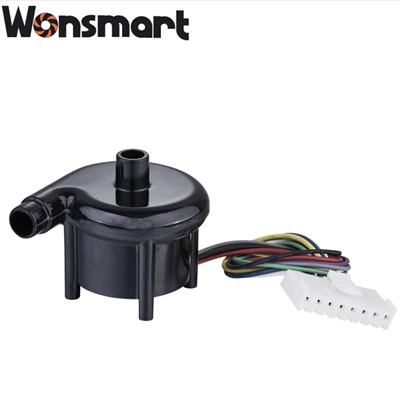
A medical blower is a specialized device used in various medical applications to provide airflow, pressure, and ventilation. These blowers are integral components in medical equipment such as ventilators, CPAP machines, and other respiratory support systems. They are designed to meet the stringent requirements of medical environments, ensuring patient safety, reliability, and comfort. If you want to know the specifications and prices of Medical Blower, please contact us!

$ 51.70

$ 38.50

$ 38.50

$ 64.90

$ 33.00
$ 27.50



$ 27.50

Product Categories
Latest Products


Enhanced Air Quality for a Healthier Environment
Doctors and medical centers place great emphasis on maintaining a clean and sterile environment to prevent the spread of infections and diseases. Blower systems provide excellent air quality control, helping to remove contaminants, pollutants, and airborne particles from medical facilities. With advanced filtration mechanisms, blower systems effectively reduce the risk of contamination and ensure a healthier environment for both patients and healthcare professionals.
Efficient Ventilation Systems for Optimal Comfort
Adequate ventilation in medical centers is crucial to provide a comfortable and safe working atmosphere. Blower systems excel in delivering efficient ventilation solutions, ensuring the constant flow of fresh air and proper circulation within the facility. These systems help maintain a temperature-controlled environment, in which doctors, nurses, and patients can feel comfortable throughout their stay.
Reliable Waste Management Systems
Medical centers generate a significant amount of waste on a daily basis. Proper disposal of medical waste is essential for hygiene and to comply with regulatory standards. Blower systems facilitate waste management by efficiently collecting, transporting, and disposing of medical waste. With their strong suction capabilities, these systems ensure the proper containment and removal of hazardous materials, contributing to a safe and clean medical environment.
Safe Transportation of Medical Samples
Transporting medical samples, such as blood, tissue, or diagnostic specimens, requires utmost care to maintain their integrity and prevent contamination. Blower systems come into play as reliable tools for the transportation process. By providing a controlled environment with consistent airflow, blower systems safeguard the samples, minimizing the risk of damage or spoilage during transportation. This enhances the accuracy and reliability of test results, ultimately benefiting patient care.
Advanced Surgical Equipment
Surgical procedures often involve intricate and delicate maneuvers, where precision and control are paramount. Blower systems integrate seamlessly with surgical equipment, enabling precise control of air pressure and flow during surgeries. This precise control enhances the accuracy and safety of surgical procedures, empowering doctors to perform with greater confidence and ensuring optimal patient outcomes.
Essential Role In Laboratory and Research Settings
Laboratory and research facilities extensively rely on blower systems to support their scientific investigations and experiments. From maintaining controlled environments for cell cultures to providing air circulation in fume hoods, blower systems are indispensable in these settings. The continuous airflow these systems provide contributes to the stability and efficiency of various laboratory processes, enabling groundbreaking research and advancement in medical science.
Types of Medical Blower
Positive displacement blowers, which are suitable for applications which involve either air or neutral gas, operate in a relatively simplistic fashion. Air or gas enters through a section on one side of the blower which increases in size and exits through the other side which decreases in size. Due to the difference in proportion between the entry and exit points, positive displacement of the air occurs as it is released through the contracting side, increasing air pressure. A particular feature of this kind of blower is that regardless of pressure changes, the speed of airflow remains consistent.
One specific kind of positive displacement blower is the rotary lobe blower. This operates by way of dual rotors which rotate in opposing directions. The blower draws in air, and the lobes spin the air around before impelling it outward.
Due to the rotary lobe function, these blowers produce a high volume of air, and thus are useful for larger vacuum systems. As these types of blowers are used for applications such as aeration tank deoxygenation, the air pressure generated is quite moderate (roughly 15 psi).
Helical screw blowers, much like centrifugal blowers, are able to produce air at higher pressures than rotary lobe blowers. Helical screw blowers utilize two rotors, which are each equipped with lobes (usually two or three). The main rotor fits into the flute of a second rotor.
A helical rotor is designed to give higher and more precise pressure due to the unique helical shape of the lobes on the rotor; the helical geometry works in such a way that it squeezes the air between the rotors. These rotors are also carefully aligned to avoid any contact between the lopes.
Centrifugal blowers are typically used in applications where there is a need for high pressure and variable flow. These blowers have rotating impellers, which increase the speed of the air (or gas) as it passes through. Additionally, as the air enters the blower's fan wheel, it rotates 90 degrees and exits the blower at a faster rate than it entered. This type of blower is ideal for maintaining continual gas transfer. As gas passes through, kinetic energy is increased, and thus as the gas is discharged from the blower, gas enters to level out the pressure.
Application of Medical Blower

Air Beds
Patients who are bedridden or must spend long periods in bed are at significant risk of developing bedsores. However, air beds can substantially reduce this risk. Air beds raise and lower surfaces across the bed by inflating and deflating individual air chambers within the bed. This slightly changes the position of the patient each time and prevents constant pressure or friction from causing bedsores. Air beds are constructed of air-permeable materials that further reduce the risk. Air blowers and fans play a critical role in inflating the air chambers and ensuring the movement of air throughout the mattress.

Respiratory Devices
Respiratory devices support patient breathing for conditions such as chronic pulmonary disease, and blowers and fans help ensure consistent performance. Our side channel blowers provide regulated ventilation in half-stationary or portable systems. Each fan and blower is built for a long lifespan with minimal downtime to provide patients with uninterrupted respiratory support.

Sterilization
Steam sterilizers disinfect or clean equipment that cannot otherwise be easily or completely sterilized to the standard required in hospitals. Sterilization systems generate hot steam, which transports heat energy to the surface of the parts needing sterilization; as those parts heat up, the proteins of contaminants are destroyed and the germs are denatured. Humid heat is ideal for hospitalization equipment sterilization. The process is faster and doesn't require as high of temperatures as dry steam sterilization. Fans and blowers move humid steam throughout the sterilization vessel for thorough airflow and complete sterilization.

Incubators
Incubators help premature babies in NICUs by protecting the general hospital environment. Each incubator houses fans and blowers that can help regulate atmospheric pressure within the incubator, temperature, and ventilation. Maintaining a tightly controlled environment is crucial for helping premature babies develop and minimize the risk of contamination or stress.
The fans and blowers used in incubators must be vibration-free and low-noise. They also must be fail-safe to ensure the environmental conditions within the incubator are stable and optimal.
How to Choose Medical Blower
A correctly sized blower installation will help to achieve a more energy-efficient process. For instance, in a situation where compressor turndown is employed as the low-pressure source, replacing the compressor with an air blower to deliver 0.3 and 1.5 bar(g) air will result in significant savings. For every 1 bar(g) the air is compressed above the actual demand, 7% of energy is wasted.
Site conditions have a bearing on blower choice. For example, dusty environment or hot humid site for a blower installation might dictate the choice of a technology offering a reliable positive displacement screw, lobe blower or multi stage centrifugal to provide a reliable source of low pressure air with no much of sensitivity to dust or high ambient temperatures. On the other hand, the application criterion of lower energy costs may be best met by a more energy-efficient technology that comes with a higher capital cost.
The cheapest solution to purchase does not automatically result in the lowest operating costs. It is therefore advisable not only to consider the investment costs in the design phase, but also to keep an eye on the necessary expenses over the entire life cycle of the machines to get the maximum ROI.
A feature of the latest generation of low-pressure blowers is intelligent baffle and canopy design that provides reduced sound levels down to 72dB(a) for an improved working environment. Consequently, installation costs are reduced as there is no need for the provision of noise-insulated rooms and doors.
When it comes to routine maintenance and service support, some older blower technologies may require units to be serviced, repaired or re-furbished offsite. Advanced design developments in the latest oil-free, low-pressure blowers now sees the inclusion of low maintenance components, extended on-site service intervals, each blower technology need to have routine services and checkups , however the each technology design and mechanism differs on the number of consumables and service periods and the benefits of lifetime customer support plans.
It pays to check the vital statistics. As an example, the tri-lobe rotors incorporated into the latest generation of low-noise, low-vibration, low-pulsation blowers are capable of sweeping nearly six times the volume of air in a single revolution compared to their belt-driven, twin-lobe predecessors. On average, this older technology experiences 5% - 7% more transmission losses.
An important advantage of the direct-drive, oil-free, rotary screw blowers is wide turndown, especially on models with integrated inverter drives. This allows the units to match the airflows to the daily and seasonal variations in the effluent inflow, resulting in additional energy savings. In order to cope with fluctuations in air demand, screw blower technology can operate from 100% capacity to 25% with very little change in specific power requirement
Components of Medical Blower
Fan for Blower Motor
It is possible to confuse a blower motor fan with a wheel or a cage due to the way that it is shaped. The plastic blades of this device are designed to funnel and direct airflow as the device is turned. This makes it possible for the blower motor of the air conditioner to provide an adequate amount of heated or cooled air to the space. The rate at which the wheel is turning has a direct bearing on the amount of airflow. That, in turn, maintains a consistent temperature across the space.
A resistor module is responsible for regulating the speed of the air conditioner. The blower motor control module is what's responsible for regulating the speed in modern air conditioners. Innovative electronic circuitry that can change the voltage that is fed into the motor is built into the module. The addition of this feature makes it simpler to adjust the speed of the motor. Additionally, low speeds are possible when operating the fan..
Housing for Blower Motor
The casing shields the blower motor against debris and any other potential threats that may be present. In addition to this, the casing acts as the connection point for the assembly. In addition, the power source for the motor is connected to the housing by means of the electrical harness as well as the connectors. The device needs fuses, a relay, and a resistor in along with the primary circuit board in order to function properly.
Both the resistor, which enables speed regulation, as well as the blower motor's relay, which connects power to the motor by means of a low current signal, are necessary for the operation of the blower. The blower motor's resistor is something that can only be found in older versions or those that use the brush-type of motor.
In more modern systems, the resistor role is handled by a module of electronics rather than a physical component. When the blower fails to have housing, then it will be more prone to damage because dirt, grime, oil, as well as moisture will be able to get into its wires.
Main Parts
Motor: Is both the source of the blower's power and its primary component. It is the one that is in charge of driving the shaft. The movement of the fan is directly proportional to the operation of the motor.
Belt: The fan connects directly to the belt, which in turn is attached to the motor shaft through which the belt passes. The movement of the fan is directly proportional to the operation of the motor, which spins the shaft. The fan in certain HVAC systems is driven by a pulley instead of a belt. Some are of the direct drive variety, which means that the motor shaft rotates the blades of the fan without the use of a belt.
Shaft: The impeller is attached to a shaft in this design. This component draws energy from the torque produced by the motor in order to power the impeller.
Housing: If the blower does not have housing, it will be more susceptible to damage because of the infiltration of dirt, grime, oil, and moisture into its wires.
Bearings: Bearings serve to minimize friction among the rotating shaft with the motor so that the impeller can continue to spin in place. Bearings are responsible for keeping the impeller spinning.
Capacitor: Capacitors enable the motor run as well as start, provide the motor greater starting torque and helps the motor operate more effectively. In addition, capacitors provide the motor extra starting power. It would not start because there isn't enough torque for turning the blower wheel and fan belt.
Our Factory

Certificate

Frequently Asked Questions
As one of the most professional medical blower manufacturers and suppliers in China, we're featured by quality products and good service. Please rest assured to buy high-grade medical blower at competitive price from our factory.
centrifugal direct drive fans, 12v centrifugal blower fan, centrifugal extractor fan