


Ningbo Wonsmart Motor Fan Company is a professional manufacturer with a focus on small sized brushless dc motors and brushless dc blowers. Our blower's max airflow reaches 400 cubic meter per hour and a max pressure of 60 kpa.
Wide Product Range
Wonsmart production and inspection equipment include auto winding machines, balancing machines, and CNC machines. We also have airflow and pressure testing equipment and motor performance testing equipment. All products are 100% inspected before delivery to guarantee all the products arrive at the customers with satisfied quality.
Quality Assurance
Wonsmart is certificated by ISO9001 With ETL, CE, ROHS, REACH and ISO13485 certification,we have paid attention to product quality and customer service. Our professional and energetic team hold the same goal of being one of the best brushless motor and blower supplier.
Products Sell Well
Wonsmart's products are exported to North America, EU, Japan and Korea. Customers from these countries are very satisfied with Wonsmart's stable quality, fast delivery and reasonable price.
OEM & ODM Available
We also accept ODM and OEM projects and customized specification. Please feel free to contact us.
What is Fuel Cell Blower
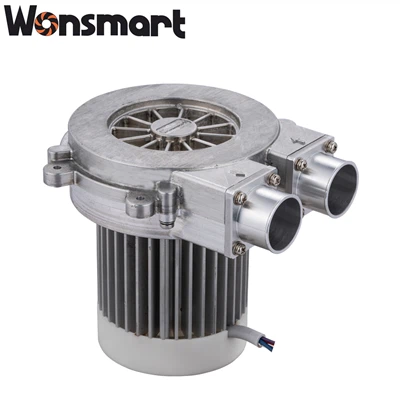
A fuel cell blower is a crucial component within the fuel cell system, playing a vital role in ensuring the efficient and reliable operation of fuel cells. To understand the significance of the fuel cell blower, it is essential to delve into the broader context of fuel cell technology, its applications, and the specific functions that the blower performs within this system. If you want to know the specifications and prices of Fuel Cell Blower, please contact us!

$ 181.50


$ 64.90


Product Categories
Latest Products


Advantages of Blower
Power Usage
Industrial blowers offer a variety of outputs due to their various structures and innovations while having a very low use of input power. Since industrial blowers are used in offices, industrial operations, manufacturing, and technical production, it is essential that they be a cost effective part of the operation. All industrial blowers are designed for economical use of power to provide control of electrical costs. Construction, proper installation, and insulation materials are all used to keep costs down and efficiency up.
Adaptability
Industrial blowers are available to fit any form of air and gas movement operations. They come in different styles, designs, sizes, and configurations or can be custom built to fit unique applications. Regardless of the size of the space or the requirements of the application, an industrial blower can meet the requirements. A factor that adds to the adaptability of industrial blowers is the variety of configurations of fan blades, which makes them flexible enough to fit any airflow and pressure conditions.
Meet Occupational and Safety Health Administration (OSHA) Requirements
There is an ever growing need for the creation of work environments that have the central concern for the health and well being of workers. Many of the requirements come from OSHA and its set of standards. In an effort to comply with the regulations, manufacturers have requested for assistance in airflow purification and control from industrial blower producers, who produce fans and blowers that are specifically designed to meet OSHA standards.
Durability
One of the reasons for the popularity of industrial blowers is their ability to withstand the harsh and hazardous conditions that require their use. Hardcore and stressful industries have found that using industrial blowers improves working conditions and productivity while being able to endure the severe nature of the work environment.
Ventilation
A major issue in any workplace is the ventilation system. For harsh conditions, ventilation provides needed airflow to keep conditions cool. In the electronics industry, ventilation is necessary to avoid contaminants on delicate and intricate parts. In either type of environment, air movement and ventilation create a healthier and more pleasant work atmosphere. The advanced ventilation methods provided by industrial blowers remove dust, fumes, smoke, and contaminants to create a safe workplace. Industrial blowers stir up the air in enclosed areas, replacing stale and contaminated air with fresh air.
Regulation of Fumes and Smoke
There are several industrial operations that produce toxic fumes or lung damaging smoke, which has to be removed and exhausted. Under the present environmental restrictions, releasing such contaminants into the air can lead to serious difficulties with environmental agencies. Industrial blowers assist in the alleviation of the problem by using various methods for dissipating dangerous fumes and smoke.
Healthy Work Conditions
Industrial blowers provide protection against respiratory diseases. The fans, impellers, and blades are designed to vent and cool large spaces. They keep humidity down to keep spaces cool and comfortable. A major health benefit of industrial blowers is the removal of dust, particulates, and contaminants from the air to create a clean air workspace. The removal of these harmful materials prevents respiratory diseases and other health issues.
Humidity Control
Dampness in a room leads to foul smells and bad odors. The nature of industrial blowers is to maintain constant airflow, which prevents the accumulation of unpleasant odors that can lead to non-hygienic conditions.
Dust Collection
The size and volume of air that an industrial blower moves requires some form of collection system. Depending on the operation, that system can involve a receptacle, bag, filter, or some other type of collection device. The simple fact that industrial blowers stir up the air makes it a necessity to have some form of collection method to protect workers. The type and size of the collection is dependent on the size of the industrial blower and the space to which it is directed.
Types of Fuel Cell Blower

Positive Displacement Blowers
Also known as rotary lobe blowers, positive displacement blowers exist for a simple but impactful reason – they keep and release air at a specified time, pressure, velocity, and direction, using a safety valve, which is a necessary part of the blower. These can also move fluid in a certain direction, still using mechanical processes.
Its other name comes from the rotary lobe it possesses – when two propellers counter-rotate and are usually powered by electric motors.
For air or gas, a positive displacement blower works by allowing air to enter and flow through one chamber (the expanded inlet), and then allowing it to seamlessly exit through another (the decreased outlet). As mentioned, these blowers are experts at keeping airflow constantly at the same speed and flow, even with increasing or decreasing pressure.
Positive displacement blowers are usually used in petrochemical industries, and for the following tasks: sewage aeration, gas boosting, powder or pellet transfer, conveying, and flushing. This blower streamlines the flow of air without coming in contact with any of the outside air, so this is recommended for tasks that need chemical or contaminant-free air to flow.

Centrifugal Blowers
Another common type of blower is the centrifugal blower, which is the most frequently used type in most ventilation systems, because of its capacity to continuously transfer gas/air steadily, as well as keep out any air pollution.
They're made of rotating impellers, which is where an airstream goes through. As more air comes in, the speed and volume increase as well, with the direction also changing as the impellers continue to operate. The fan wheel is what shifts in direction and quickens when air passes through and exits quickly – this is because more air means an increase in kinetic energy, too.
Centrifugal blowers can be made from single or multiple units, made with different blade orientations and designs (radial, backward or forward-curved). They can also offer a variety of speeds, depending on the flow rates needed, speed drives used, and shape of blades.
The main purpose of this type of blower is to create a certain amount of pressure to suck in, circulate, and release new air. It is also responsible for emitting high pressure and strong airflow from a limited amount of air/gas.
This capacity of theirs is mostly used for manufacturing tasks like drying, cooling, combustion, air conveyors, dust or toxins control, as well as small but vital everyday tasks, like gas meters, aquarium filters, and even medical equipment applications.
Other applications that make use of the centrifugal blower's ability to produce a large volume of hot air includes temperature control, exhausting hazardous gases, chemical filtering, heating, furnaces, printing, food processing, household appliances, pollution control, incinerators, and plastic, wood or textile-making machines.

Regenerative Blowers
This kind of blower is built with an impeller that spins to attract air that gets caught between its blades. This quick and constant motion is what drives air to be pushed forward, producing its ability to transfer large volumes of air at a modest or even low amount of pressure. They're built with parallel inlets that are placed perpendicular to the impeller.
As its impeller spins inside its main compartment and air is pushed in and outward (this goes on until it is turned off), making this kind of blower useful for a vacuum or pressure purpose.
This blower, because it's self-lubricated, is usually used in facilities that don't allow oil or moisture in the air, such as food processing facilities, clinics, hospitals, or noise-sensitive working environments, and can do jobs like aeration and transportation well. Because they're good for removing any flammable gasses or toxic chemicals in industrial air, their other purposes include dust and smoke exhaustion, sewage cleaning, engraving, vacuum packaging, dryers, printing presses, packaging, and vacuum systems.
They're also recommended because it doesn't get into contact with anything else, significantly decreasing its need for regular maintenance or repair.

High Speed Blowers
As the name already suggests, a high speed blower possesses very high levels of speed, resulting in equally high pressure and airflow. It is powered by a motor or electricity, and is built with impellers around the sole shaft of the blower to increase the amount of air it can take in. Despite being highly effective, they don't produce loud sound.
They may be built differently but a high-speed blower usually consists of a valve that releases the air and a compression unit that controls the speed of the blower's rotation. The speed and pressure can be adjusted to whatever purpose your facility might need. These common purposes may include (but are not limited to) ridding water of wastes, distillation, generating power, or brewing.
Important Considerations to Make When Choosing Application-Focused Industrial Blowers(
Industrial blowers are of different types. Radial blowers, centrifugal blowers, axial blowers etc are the different types of industrial blower fans . However, based on the application and environment, each type of blower will perform differently. Therefore, choose the blower based on available space and resources, and desired outcomes. This can include consideration of the type of blades, blade orientation, etc.
It is always recommended to purchase industrial ventilation blowers with low energy consumption. This helps in saving energy costs and enhances the overall efficiency of the blower unit. Low power consumption and high output should be the aim while choosing efficient industrial blowers.
The blower fans often increase the pressure of output air in comparison to the input air. The output air pressure can impact industrial operations like gas exhaust, drying, etc. Therefore, the blower with desired air pressure should be chosen.
The flow capacity is the amount of output air. It is also called throughput. However, the flow capacity should always be considered by identifying the area of air exposure required.
The blowers are mechanical equipment and therefore are susceptible to internal and external noise and vibrations. These factors can impact on performance and durability of the industrial blower fan. That is why the blowers with low noise generation and high vibration tolerance must be chosen.
Slight exposure to noise, vibrations, etc are inevitable in electromechanical systems like industrial blowers. In addition, factors like harsh environmental conditions, heat generation, external impact forces, etc cause damage to the blowers. One should always choose a blower with minimum requirement maintenance and repairs. Low maintenance also results in lowering the overall cost of usage of the blowers.
Our Factory

Certificate

Frequently Asked Questions
As one of the most professional fuel cell blower manufacturers and suppliers in China, we're featured by quality products and good service. Please rest assured to buy high-grade fuel cell blower at competitive price from our factory.
best centrifugal fan, carpet fan, high pressure turbo blowers