


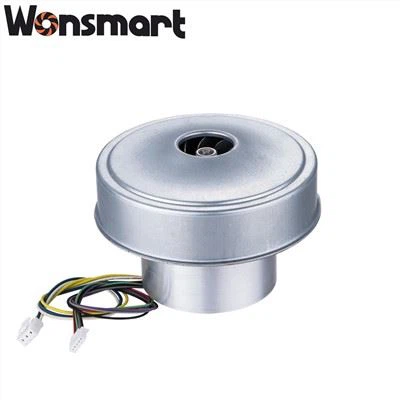
Ningbo Wonsmart Motor Fan Company is a professional manufacturer with a focus on small sized brushless dc motors and brushless dc blowers. Our blower's max airflow reaches 400 cubic meter per hour and a max pressure of 60 kpa.
Wide Product Range
Wonsmart production and inspection equipment include auto winding machines, balancing machines, and CNC machines. We also have airflow and pressure testing equipment and motor performance testing equipment. All products are 100% inspected before delivery to guarantee all the products arrive at the customers with satisfied quality.
Quality Assurance
Wonsmart is certificated by ISO9001 With ETL, CE, ROHS, REACH and ISO13485 certification,we have paid attention to product quality and customer service. Our professional and energetic team hold the same goal of being one of the best brushless motor and blower supplier.
Products Sell Well
Wonsmart's products are exported to North America, EU, Japan and Korea. Customers from these countries are very satisfied with Wonsmart's stable quality, fast delivery and reasonable price.
OEM & ODM Available
We also accept ODM and OEM projects and customized specification. Please feel free to contact us.
What is Home Appliance Blower
An Electric Air Blower machine is a simple and effective device used in homes and industries to blow away dust from every nook and corner. Gadgets and electronics have delicate parts that cannot be cleaned with a cloth. This is when you need air blowers to remove dust with its continuous air pressure. If you want to know the specifications and prices of Home Appliance Blower, please contact us!

$ 42.90


$ 27.50
$ 64.90


Product Categories
Latest Products


Advantages of Vacuum Cleaner Blower
Versatile Cleaning
A vacuum cleaner with blower function allows you to switch between vacuuming and blowing, making them ideal for a wide range of cleaning tasks. These machines offer all-in-one convenience, from cleaning floors and carpets to removing dust from hard-to-reach areas.
Efficient Outdoor Cleaning
The blower function lets you easily clean outdoor spaces like patios, driveways, and garages. You can swiftly remove leaves, debris, and dust from outdoor furniture or clear the clutter from your garden.
Time-Saving
You don't need separate tools for different cleaning tasks with a vacuum cleaner with a blower function. It streamlines your cleaning routine, saving you time and effort. You can check out Agaro vacuum cleaner online for better and more efficient cleaning.
Cost-Effective
Investing in a vacuum cleaner with a blower function eliminates the need to purchase a separate blower, for example, a sofa cleaning vacuum cleaner or a car cleaning vacuum cleaner, saving you money in the long run.
Easy Maintenance
These dual-purpose machines often come with washable dust bags or filters, reducing the need for frequent replacements and making maintenance hassle-free.
Types of Home Appliance Blower


Positive Displacement Blowers
Positive displacement blowers are ideal for moving neutral and air gases as they work by maintaining a constant flow and speed regardless of any change in pressure.
There are two types of positive displacement blowers: rotary lobe blowers and helical screw blowers. The former is low maintenance but can be loud, whereas the latter operates more quietly and has better energy efficiency.
Centrifugal Blowers
This type of air blower is perfect for ventilation systems as it can help to control air pollution and gas transportation. It works by changing the direction of airflow.
Centrifugal air blowers can be used for a number of different applications which require variable flow and high pressure.
Multistage Centrifugal Blowers
Multistage centrifugal blowers can be used to carry out applications such as wastewater treatment, landfill gas boosting, and the powering of artificial lungs. This type of air blower works by rotating the machine to provide increased air pressure and offers high-pressure tolerance.
High-Speed Blowers
As the name suggests, high-speed air blowers provide high pressure and high airflow, which makes them ideal for a number of different applications. This piece of equipment also offers double suction and comes equipped with a motor and impellers on each side.
Typically, high-speed blowers can reach pressure up to 25 psi, making them one of the most heavy-duty pneumatic blowers on the market.
Regenerative Blowers
Regenerative blowers contain oil-free components, which makes them easy to maintain. They can be used for a number of different applications which require low air pressure.
How to Choose Home Appliance Blower
A correctly sized blower installation will help to achieve a more energy-efficient process. For instance, in a situation where compressor turndown is employed as the low-pressure source, replacing the compressor with an air blower to deliver 0.3 and 1.5 bar(g) air will result in significant savings. For every 1 bar(g) the air is compressed above the actual demand, 7% of energy is wasted.
Site conditions have a bearing on blower choice. For example, dusty environment or hot humid site for a blower installation might dictate the choice of a technology offering a reliable positive displacement screw, lobe blower or multi stage centrifugal to provide a reliable source of low pressure air with no much of sensitivity to dust or high ambient temperatures. On the other hand, the application criterion of lower energy costs may be best met by a more energy-efficient technology that comes with a higher capital cost.
The cheapest solution to purchase does not automatically result in the lowest operating costs. It is therefore advisable not only to consider the investment costs in the design phase, but also to keep an eye on the necessary expenses over the entire life cycle of the machines to get the maximum ROI.
A feature of the latest generation of low-pressure blowers is intelligent baffle and canopy design that provides reduced sound levels down to 72dB(a) for an improved working environment. Consequently, installation costs are reduced as there is no need for the provision of noise-insulated rooms and doors.
When it comes to routine maintenance and service support, some older blower technologies may require units to be serviced, repaired or re-furbished offsite. Advanced design developments in the latest oil-free, low-pressure blowers now sees the inclusion of low maintenance components, extended on-site service intervals, each blower technology need to have routine services and checkups , however the each technology design and mechanism differs on the number of consumables and service periods and the benefits of lifetime customer support plans.
It pays to check the vital statistics. As an example, the tri-lobe rotors incorporated into the latest generation of low-noise, low-vibration, low-pulsation blowers are capable of sweeping nearly six times the volume of air in a single revolution compared to their belt-driven, twin-lobe predecessors. On average, this older technology experiences 5% - 7% more transmission losses.
An important advantage of the direct-drive, oil-free, rotary screw blowers is wide turndown, especially on models with integrated inverter drives. This allows the units to match the airflows to the daily and seasonal variations in the effluent inflow, resulting in additional energy savings. In order to cope with fluctuations in air demand, screw blower technology can operate from 100% capacity to 25% with very little change in specific power requirement.
Impeller: The Heart of the Centrifugal Blower
Impellet of a centrifugal fan is the most crucial part of the assembly. Comprising a set of blades, the impeller gives wings to the air passing through. With a touch of centrifugal magic, it propels the air outward, enhancing its speed and power. The impeller's design – including the number, shape, and arrangement of blades – holds the key to unlocking the blower's performance potential. The height, width, curves, numbers of blades, degree of inclination defines how well air will be discharged and how efficient the pressure is increased.
- Generally there are 4 major types of blade in centrifugal blower
- Aerofoil Impeller
- Backward Curved Impeller & Backward Inclied Impeller
- Forward Curved Impeller & Forward Inclined Impeller
- Radial type Impeller
Housing/Casing: Containment and Direction
Think of the impeller like the conductor of an airflow orchestra. It plays a crucial role in controlling how air moves. Made up of a bunch of blades, the impeller pushes the air forward. By using centrifugal force, it makes the air go faster and stronger. How the impeller is made – how many blades it has, their shape, and how they're arranged – determines how well the blower will work. This design is what makes the blower perform better or worse.
Depending on the size, the casing can be designed and manufactured in two or single parts. To ease the manufacturing and assembling, split cage design is suggested for big impeller size above 1500 mm. The material of consturction depends on the nature of fluid to be handled.
Inlet and Outlet: Entry and Exit Points
Now, let's focus on the inlet and outlet – these are the places where the blower connects with the outside. The inlet brings air into the blower, and the outlet lets out the high-pressure air that the impeller has created. These parts are designed carefully to make things work better. A well-designed inlet reduces turbulence, making sure the air comes in smoothly. And the shape of the outlet affects how the high-pressure air comes out at the end.
Inlet and outlet are provided with important accessories like guide vanes, silencers, suction filters & air dampers
Motor: Powering the Blower
Let's introduce the motor, the powerhouse that makes the blower work. The motor gives the impeller the energy it needs to move the air around. In the world of blowers, these motors need to be strong, with good torque. They have to overcome the resistance from the impeller and the weight of the air. Picking the right size and type of motor is as important as choosing the main actor in a play – it's key to a great performance and the blower's durability.
Bearings: Enabling Smooth Rotation
Now, let's explore the world of bearings – these are the essential parts that keep the impeller spinning smoothly. Bearings have an important job; they help the impeller rotate really fast with as little friction as possible. Keeping the bearings well-oiled and properly taken care of is what keeps the blower working well for a long time. Plus, bearings also help absorb any unexpected forces while the blower is running, sort of like backstage workers making sure everything goes smoothly during a show.
How to Clean a Blower
Fuel Filter
We recommend changing the fuel filter at 6-monthly intervals or at least once a year (every 3-4 months for intensive use of the blower). The fuel filter should be replaced by an authorised service centre: Efco distributors and service centres guarantee specialised technical service for rapid replacements with exclusively genuine original parts.
Clean the engine air vents, cylinder cooling fins, and spark plug
After cleaning the blower air filter, focus on cleaning the area of the carburettor and engine. Here, it is important that the air should flow freely between the cylinder fins to ensure the engine runs at the correct temperature without overheating. Therefore, clean the cylinder cooling fins with compressed air once a week.
Clean the spark plug to remove oil residues with a rag and check the electrode gap (0.5 mm for the spark plugs of Efco petrol-engine blowers). If you need to change the spark plug, consult the use and maintenance manual supplied with your blower to identify the specific spark plug required.
Clean also the engine cover, paying attention to the air vents: an unobstructed air passage is essential in order to ensure correct engine cooling.
To Clean the Blower, Start With the Air Filter
Cleaning of the blower starts by inspecting the air filter, which is one of the main components of petrol-engine blowers.
To clean the blower air filter after using the tool or anyway every 10 working hours:
Remove the filter cover casing and clean the inside.
Remove the filter and clean it by tapping it on a solid surface.
If necessary, use a brush to clean between the filter fins by brushing lengthwise.
Alternatively you can use compressed air, blowing at a distance from the rear towards the exterior, working in the lengthwise direction.
Clean also the edges of the filter.
Refit the filter and re-close the cover.
Why clean the air filter? A clogged air filter results in an excessively rich fuel-air mixture, which produces a high volume of combustion residues that are then deposited in the engine.
Replace the filter if it is damaged or fouled with fuel; anyway, the filter should be changed every 6 months. If the blower is subject to intensive use, the air filter should be replaced more frequently.
Clean the Fan Protective Grille
Careful cleaning of the blower must also consider the engine fan protective grille: in the case of hand-held blowers such as model SA 3000, the grille is on the side of the tool, while on backpack blower models such as the SA 2062 and SA 9000 the grille is located behind the back support cushion.
As for the engine cover air vents, if the openings in the fan grille become clogged with dust, the air flow will be diminished resulting in damage to the fan and overheating of the engine.
Cleaning the Battery-Powered Blower
How should we clean a blower if, rather than a petrol-engine model, we are dealing with a battery-powered tool such as the Efco SAi 60? Before cleaning your battery-powered blower, like any other maintenance operation, always remove the battery from its housing.
After using the battery-powered blower, in addition to cleaning the air vents as in the case of petrol-engine blowers, use a clean dry cloth (do not use water) to clean the blower and the battery.
Our Factory

Certificate

Frequently Asked Questions
As one of the most professional home appliance blower manufacturers and suppliers in China, we're featured by quality products and good service. Please rest assured to buy high-grade home appliance blower at competitive price from our factory.
