


Inflatable Blower
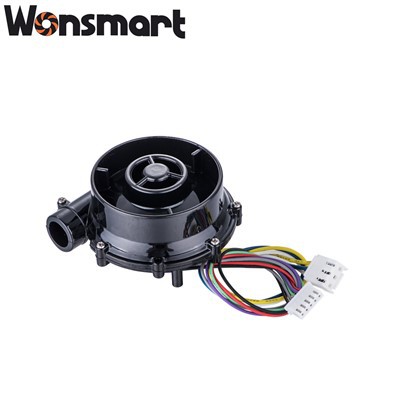
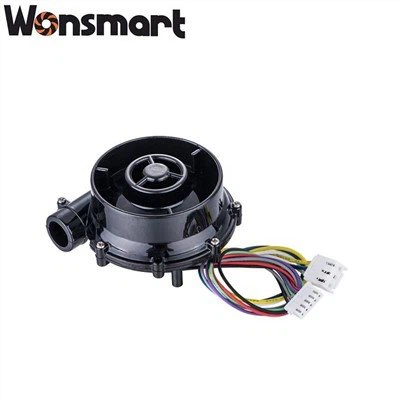
Ningbo Wonsmart Motor Fan Company is a professional manufacturer with a focus on small sized brushless dc motors and brushless dc blowers. Our blower's max airflow reaches 400 cubic meter per hour and a max pressure of 60 kpa.
Wide Product Range
Wonsmart production and inspection equipment include auto winding machines, balancing machines, and CNC machines. We also have airflow and pressure testing equipment and motor performance testing equipment. All products are 100% inspected before delivery to guarantee all the products arrive at the customers with satisfied quality.
Quality Assurance
Wonsmart is certificated by ISO9001 With ETL, CE, ROHS, REACH and ISO13485 certification,we have paid attention to product quality and customer service. Our professional and energetic team hold the same goal of being one of the best brushless motor and blower supplier.
Products Sell Well
Wonsmart's products are exported to North America, EU, Japan and Korea. Customers from these countries are very satisfied with Wonsmart's stable quality, fast delivery and reasonable price.
OEM & ODM Available
We also accept ODM and OEM projects and customized specification. Please feel free to contact us.
What is Inflatable Blower
Cooling blowers are the fans inside of an AC unit that blows air inside a cooling coil that transfers the air into an arctic blast that refreshes components and spaces. If you want to know the specifications and prices of Inflatable Blower, please contact us!

Product Categories
Latest Products


Improved Hygiene and Air Quality
Maintaining ideal hygiene standards is one of the key challenges in food processing facilities. Centrifugal blower fans help achieve this by efficiently circulating air. These fans have the ability to remove polluted or old air, keeping the air in your food preparation area clean and fresh. A clean and hygienic environment is vital to prevent the growth of harmful microorganisms and bacteria in food products, ultimately safeguarding food products from potential contamination and ensuring compliance with stringent regulatory requirements.
Temperature and Moisture Control
In a facility used for processing food, centrifugal blower fans are highly effective in managing the temperature and moisture levels. They can aid in maintaining a uniform level of product quality by regulating the temperature of ovens, dryers, and other machinery. Furthermore, these fans help to remove moisture, preventing condensation and the mold growth, which is especially important in areas with high humidity. Select the fans based on your requirements.
Energy Efficiency
Choosing a Centrifugal Blower Fan Manufacturer in India that produces energy-efficient fans can significantly reduce operational costs. Centrifugal fans are known for their energy efficiency because they can move a substantial volume of air with minimal power consumption. These fans not only reduce operational costs but also promote sustainability, align with environmental regulations, and ensure consistent, reliable performance in your food processing unit.
Enhanced Ventilation and Airflow
Proper ventilation is crucial in food processing units to eliminate heat, odors, and fumes generated during various processing stages. By effectively dissipating heat, mitigating odors, removing fumes and particles, and ensuring uniform airflow, these centrifugal blower fans contribute to a safer, more comfortable, and productive environment for your employees. Such measures not only elevate workplace conditions but also enhance overall operational efficiency.
Compliance with Regulatory Standards
In the food processing sector, it is crucial to adhere to regulatory requirements and guidelines. You can follow these guidelines by using centrifugal blower fans to keep the required levels of ventilation, temperature, and hygienic conditions. By ensuring proper ventilation, temperature control, and hygienic conditions, these centrifugal blower fans contribute to the security of your products and the preservation of your company's reputation in the highly regulated food processing sector.
Types of Inflatable Blower
Forward Curved Blower
Forward curved Blower have a relatively large amount of forward facing curved impeller blades (facing the direction of rotation of the impeller). The blades are relatively shallow in terms of the length of the blade arc. Forward curved Blower can either be of a single-inlet or double-inlet type with air inlet to the impellers at right angles to the direction of airflow through the fan.
This type of fan requires a fan scroll housing or volute to convert the high velocity air exiting the blades into static pressure and also to provide directionality for the output airflow. The power demand for this type of fan steadily increases in proportion to the airflow being delivered, meaning that motors can easily be overloaded if operating at higher flow rates and lower pressures.
This type of fan is particularly suited to higher flow rate applications requiring lower operating speeds in comparison with a backward curved Blower, but has a lower overall efficiency when compared with a backward curved fan.
Backward Curved Blower
Backward curved Blowers typically have fewer impeller blades which are facing away from the direction of rotation of the impeller. The blades have a longer blade arc length in comparison with forward curved fans, so in general tend to be larger in diameter.The impellers usually have a shaped inlet shroud at the inlet side to the impeller and can be either single-inlet or double-inlet in design. In contrast to a forward curved impeller, static pressure is developed across the depth of the impeller blade meaning that backward curved impellers can be configured for use either with or without a fan scroll. Adding a fan scroll can provide a better pressure characteristic so is therefore suited to combustion (boiler) fan applications or applications which need a higher pressure capability. Operation without a fan scroll is more suited to applications with higher flow rate requirements. The power demand for a backward curved impeller fan, typically peaks around the middle of its performance characteristic, so that the motor is less liable to be overloaded at lower pressures & higher flow rates.
Backward curved fans offer an improved level of efficiency in comparison to a forward curved impeller type, but typically require higher speeds of operation to achieve higher airflow rates.
Crossflow / Tangential Blower
Crossflow / tangential fans consist of an extended forward curved impeller type (similar to a cylindrical lawn mower blade) and also requires the use of a type of fan scroll (volute). Instead of the air entering the impeller through the eye of the impeller, for this type of fan the scroll housing has an opening on one side usually at 90° from the direction of the air outlet.
This type of fan is suited to applications that require a high airflow rate but at low system restriction pressures. Due to the reduced overall height of this product type it is particularly suited to high flow rate applications within a reduced space envelope. This type of product has similar characteristics to a regular forward curved fan in terms of its power usage, but has a lower overall efficiency than a regular forward curved fan.
Due to the blade length and proximity to the scroll housing's inlet, these types of fans are can suffer from excessive noise levels or blade passing noise. These fans are also not suited to higher pressure applications and quickly become unstable when subjected to higher system restriction pressures.
Radial Bladed Blowers
Radial bladed fans are in some ways similar to a backward curved impeller, but have straight impellers blades typically angled backwards from the direction of rotation but can sometimes be vertical from the impeller axis.
Radial bladed Blowers act in a very similar way to a regular backward curved fan but for most applications require the use of a fan scroll to provide directionality of flow and convert some air velocity into static pressure. Radially bladed impellers can used for recirculation fans to spread air in all directions, such as in an oven. For recirculation type fans, the impeller is usually of a single piece construction (without an inlet shroud) and has fewer blades and a more open construction. This is to prevent the build-up of contamination on the impeller blades (e.g. soot), particularly in high temperature applications where exhaust gasses are being handled.
Industries that use industrial blowers

Wastewater Treatment
The purpose of industrial blowers for wastewater treatment is for tank aeration, which has to be maintained round the clock. The types of industrial blowers have to be highly reliable and be low maintenance. Another aspect of wastewater treatment is the potential for methane gas and other types of gases, which can be dissipated with industrial blowers.
Food Industry
The food industry makes special use of industrial blowers above and beyond the need for clean air. Any equipment for the food industry has to meet the demanding requirements of the Federal Food and Drug Administration (FDA) and must be completely sanitary to comply with industry regulations. Though clean airflow is a necessity for food production, there are several other functions that industrial blowers perform.
Prior to production, fruits and vegetables have to be cleaned of contaminants by being scrubbed. Before being placed into production, any residual water or possible contaminants have to be removed, which is done by an industrial blower. This is also true for bottles and cans used for packaging food products.
Soil Vapor Extraction
As industrial operations progress and businesses fail, there is a constant need for a means to ensure that soil is free of any lingering gases or toxins. Industrial blower exhausters are used to remove any possible toxins from soil to provide for safe environmental conditions.
Soil vapor extraction blowers are connected to wells and apply negative pressure to the subsurface to remove contaminants. The removed vapors are treated at the surface to guarantee total removal. The main parts of the system are the blower, its motor, and a moisture separator.
Mining
Of all of the different industries that rely on industrial blowers, the mining industry has the most obvious use as a ventilation system for underground mining. The harsh and demanding conditions of the mining industry requires that industrial blowers be robust and resilient. It is essential that they provide longevity, durability, and be maintenance free.
A concern for industrial blowers for mining operations is the dust, dirt, and particulates that can be damaging to blowers at mining operations. These hazards require that the blowers be specially designed with collection units or filtration systems.
Cement Manufacturing
In the dry method of cement production, raw materials are crushed, pulverized to be reduced to granules or powder. The crushed materials are then mixed together in a kiln to form cement. The cooking process of the kiln produces gases that have to be removed while the mixture is blended into a powder to form concrete for mixing and building.
Blowers are used as part of the pneumatic system to transport the raw materials to various parts of the system such as into the kiln and bagging the finished product. They are also used for aeration, feeding oxygen, and part of cooling systems.
Aquaculture
In the production of seafood, hatcheries play a vital part in the growing and cultivating of fresh and saltwater animals. Blowers are used to generate oxygen to help guarantee water quality and the freshness of food products. They are also used for feeding systems and the creation of bubble curtains. The main importance of air blowers for the aquaculture industry is the constant supply of fresh clean oxygen to ensure the life of the densely populated tanks.
Oxygen is a vital part of the survival of water animals, which makes aeration an important part of the production process. The aeration process maintains oxygen levels, provides constant oxygen levels, keeps water circulating, and offers protection against extreme temperature variations.
Pneumatic conveying systems offer a means of safely feeding the water organisms with pellets and powders. Industrial blowers ensure the smooth operation of pneumatic feeding systems. The versatility of industrial blowers makes them adaptable to any form of installation regardless of its location.
Oil Refining
Low pressure industrial blowers are a central part of conveying petroleum materials for product production. Part of the refining process is the production of toxic hydrogen sulfide. Thermal incinerators are used to oxidize the sulfur by cleaning it. Blowers enhance the combustion process to assist in further cleaning of the gases.
In the production of carbon, that is used to produce plastics, paints, and ink, combustion is used to produce the material. Blowers supply high volumes of air to the furnaces and assists in injecting natural gas, which allows thermal decomposition to occur.
How to Choose a Suitable Centrifugal Blower)
The airflow rate is the volume of air that the fan can move in a given amount of time. This is typically measured in cubic feet per minute (CFM) and is determined by the size of the space or system that needs to be ventilated. A blower with a higher CFM rating is required for larger spaces or systems.
To choose the right blower, you need to know the airflow requirements of your system. We will talk about how to calculate CFM later.
Another important factor to consider when choosing a centrifugal blower is the blower static pressure. This is the amount of pressure that the blower needs to overcome to move air through the system. It is a pressure exerted in all directions in the space in which it is contained, not the direction of the air. High static pressure means that the blower can also air the inside of high-density mounting devices. It is measured in inches of water gauge (WG). To choose the right blower, you need to know the static pressure requirements of your system. This can be calculated by adding the pressure drops in the system.
The required speed of the centrifugal blower is also an essential consideration. Higher speeds are needed for larger spaces or systems that require a higher CFM rate. Fan speed is typically measured in the number of revolutions per minute(RPM). It is important to choose a blower with the correct speed to ensure optimal performance.
Finally, you need to consider the intended duty of the centrifugal blower. Duty refers to the continuous operating conditions that the blower will be exposed to. This includes factors such as temperature, humidity, and the presence of corrosive or abrasive materials. Choosing a blower with the appropriate duty rating so it will perform optimally under the intended operating conditions.
Our Factory

Certificate

Frequently Asked Questions
As one of the most professional inflatable blower manufacturers and suppliers in China, we're featured by quality products and good service. Please rest assured to buy high-grade inflatable blower at competitive price from our factory.
air blower for inflatables , dc brushless centrifugal fan, 12v mini blower fan