


Understanding BLDC Blowers
BLDC blowers are equipped with a rotor comprising permanent magnets and a stator with windings. They eliminate the need for brushes and commutators found in brushed motors, thereby reducing wear, improving efficiency, and extending operational lifespan.
Role of the Driver
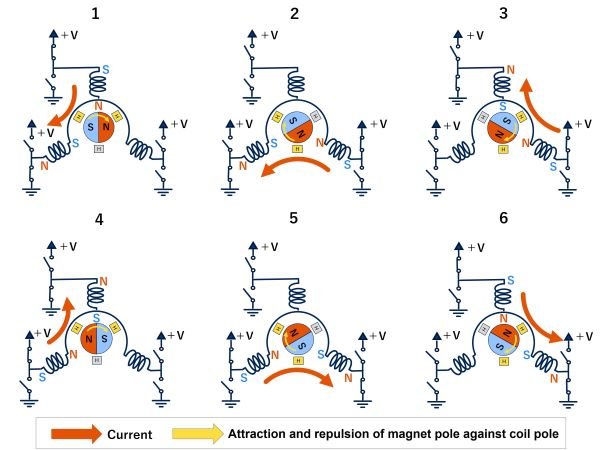
- Electronic Commutation: BLDC motors rely on semiconductor switches controlled by drivers to alternate current flow in the motor windings. This electronic commutation creates a rotating magnetic field necessary for motor operation. Drivers ensure precise timing and sequencing of these switches, critical for maintaining smooth and efficient motor performance.
- Speed and Torque Control: Drivers facilitate precise control over motor speed and torque through pulse-width modulation (PWM). By adjusting the duty cycle of the PWM signal, drivers regulate the current supplied to the motor, controlling its speed. This feature is essential in applications requiring variable airflow or precise motor control.
- Sensor Integration: Many BLDC motors utilize sensors like Hall-effect sensors to detect rotor position and speed. Drivers interpret sensor data to synchronize commutation cycles accurately. Some advanced BLDC systems employ sensorless techniques, where drivers analyze back electromotive force (EMF) to estimate rotor position without additional sensors.
- Efficiency and Noise Reduction: Drivers contribute significantly to improving motor efficiency and reducing electrical and audible noise. Unlike brushed motors, BLDC motors with electronic commutation operate silently and with minimal electromagnetic interference, making them ideal for noise-sensitive applications such as medical devices and audio equipment.
- Protection and Reliability: Drivers incorporate protection features like overcurrent, overvoltage, and thermal shutdown to safeguard both the motor and driver circuitry. These features enhance system reliability and prevent damage from electrical faults or environmental factors.
Conclusion
In conclusion, the integration of a driver is indispensable for the optimal performance and longevity of brushless DC blowers. By facilitating electronic commutation, precise speed and torque control, sensor integration, efficiency improvements, and protection mechanisms, drivers enable BLDC motors to excel in a wide range of applications. From HVAC systems to medical devices and beyond, BLDC blowers supported by drivers represent a technological advancement driving efficiency and reliability in modern engineering.


